The New Sovereigntists: No. 3
On War as the Ordinary Converter
The Kill Chain, Waged
by the Financialist Architecture
— — —
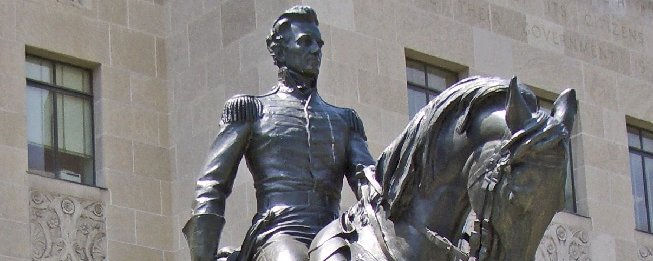
We are looking for the battle. We should be looking for the book.
Stand on the square of almost any county seat in the old republic. On one side of it stands the war memorial: names cut in stone, grouped by war—the Revolution or the Civil War at the top, then the Philippines, the Argonne, Anzio, the Chosin, the Ia Drang, Fallujah. On the other side stands the courthouse, and in it the treasurer’s office and the recorder of deeds, where the titles of the same families are kept, and the rolls on which their taxes are laid, and the book of liens and sales. The square is laid out as though the two had nothing to do with each other. The stone honors the fight; the office keeps the accounts. But they face each other for a reason no one who laid them out would have said aloud. The stone records the price. The office records what the price was paid for. Every name on that monument went out to keep a debt good or to seat a new one, and every one of them came home, or failed to, to a county whose rolls had grown heavier in his absence. A battle lasts a day. The book it serves outlives the men who fought it, and their sons, and the sons of their sons.
This essay is about war, and it must begin by separating two things the word has run together. The first is the standing war: the Financialist Kill Chain, run always, against all—the harvest of harvests, fought through the code, the fee, the rate, the schoolroom, the pulpit, and the press, and through the capacities of the state turned inward. It is not an episode. Peace, on this account, is discharge, and so long as the book lives the standing war is on. Seen across the centuries it is the War of Wars, and its last act is still to come. The second is war as the word is ordinarily meant, and it is not the standing war. It is an insertion into it. Into the war that never stops, the class that runs it periodically throws one of two tools: the fire, which is kinetic war, or the depression. They are used on the standing war’s object and on its take, and they are what this essay means by the ordinary converter.
An insertion is known by its end. It is thrown in, it does its work, and it is finished. Size does not decide it. A great war is an insertion if it closes; so is the small fire this essay calls conflict—the rebellion financed at a kingdom’s edge, the county occupied, the strike broken—each thrown in to break one district or one trade, convert what could be taken there, and be done. What is never meant to end cannot be an insertion. The campaign against a named vice, running on for generations with its seizures, its forfeitures, and its rolls of the cultivated and the watched, wears the face of fire. It is not fire. It is the standing war, continuing, in another guise.
And where the fire cannot be had, a depression will do. The depression is war against the people by other means. The kinetic war spends production; the depression withdraws it—the credit called, the shop shut, the acre foreclosed, the wage gone. Its function is the same: the book protected, the surplus taken, the stock culled, the lock set. It is the machine’s other weapon. A man of forty loses in one season the shop he spent twenty years building; he spends the next ten at half his worth, his sons scattered, his daughter unmarried, and by sixty he has nothing to hand down but a debt. No shot was fired at him. He was harvested whole. Multiply him by the million, and what dies is not only the men. It is any chance of a people recovering and building the surplus that would close the book. War and conflict, in all their forms, consume the heritage stock this way—the fire spends the sons, the trough spends the household—and the rents still fall due. What is used up must be backfilled, or the book goes unpaid.
Of the two weapons the fire is the one men cannot look away from, and that is its use. Of all the force the standing war employs against the herd, only a tenth, or thereabouts, is ever powder. The rest is the code, the fee, the rate, the ruling, and the lesson taught in the schoolroom, the pulpit, and the press. The powder is the part that can be seen, and so it is the part men argue over, and so it serves the other nine as their excuse and their cover. But mark what the nine cannot do. They extract; they cannot make the taking permanent. The takings of the standing war accumulate across a lifetime’s turn, and every accumulation has been made unrecoverable by an insertion—a great fire, external if one could be had and internal if not, or a depression where no fire could be had at all. That is the law of summation, and it is the whole meaning of the ordinary converter: the insertion is the instrument by which what was taken is made impossible to return. On one side of that instrument is the book: the sovereign debt, and everything built upon it. On the other are the people it is collected from.
Begin with the book, and with the one fact about it that governs the rest: it cannot be allowed to die. Not because it could not be paid—it has been paid, once, to the last dollar—but because the money is secured on it. The house of issue creates the reserves of the banks by buying Treasury paper, and its balance sheet is chiefly that paper. Banks and funds lend to one another overnight against it, in a market that turns over trillions a day. The primary dealers are bound to bid at every auction of it. Foreign central banks hold it as their reserve, and the reach of the dollar abroad stands on it. The money-market funds hold it, and since 2025, by statute, so must every lawful stablecoin. Retire the debt, and every one of those footings goes at once. The form has changed over the centuries—the First Bank was capitalized chiefly in federal paper, and from 1863 the nation’s notes were issued against federal bonds and contracted with them when the bonds were paid down—but the dependency has not.
It will be said that the Treasury could retire the debt and the house of issue keep the money. It could, only by holding something else in its place: private claims, bought by the center. That was the very problem the chairman of the Federal Reserve laid before the Senate in January of 2001, when the surpluses had the publicly held debt on course to vanish within the decade. Discharge would force the center either to shrink the money or to take title to the private economy outright. Neither can be allowed. Hence the book must be fed, and hence the fire.
Who feeds it? The interest needs no meeting to be shared. The house of issue, whose regional banks are owned by the banks they regulate; the Treasury, advised on its borrowing by a committee drawn from the dealers and the great funds that buy what it sells; the dealers; the great holders at home and abroad—each is paid from the same book, and each acts in its own interest and within its own mandate. But no lock was ever an accident of weather. Each was a decision, taken on a date, by men whose names are in the record: the war voted in 1812; the rate raised by the Bank of England in 1836, which pulled the credit from under the American trade; the Treasury’s gold restored by a private syndicate on the syndicate’s terms in 1895; the rate raised by the house of issue in the autumn of 1931, in the depth of the depression, to defend the gold. The requirement is systemic and the execution is deliberate. The interest comes from the book. The decision comes from the Financialists—the few who issue the money and hold the commanding paper. The force comes from the center, the state and its house of issue. There is no fourth.
Five times the book came in sight of death, and five times an insertion met it. Under Jefferson, Gallatin set the debt on a schedule to extinction and cut it nearly in half; the Embargo and the war of 1812 ended the schedule, and at the peace the book was larger than when the Jeffersonians took office. In January of 1835, under Jackson, it was retired entire—the only time in the life of the republic it has stood at nothing—and the surplus began to be handed back to the states. No war of weight offered, and so the panic of 1837 did the work, and the book reopened. Twice more it was paid down across a long peace, and twice more a depression met it, and after each depression a fire. And at the century’s end, with the surpluses running and the chairman weighing what the system would hold once the paper was gone, the towers fell. The book has not come in sight of death since. The mechanism is the proof. The sequence is the confession.
Against all of it the Jeffersonians set a peace, and it was not a sentiment. It was a programme. Produce and exchange at home. Secure the ground yourselves. Owe no house that can summon your sons. Jefferson gave the outward half of it at his first inauguration—peace, commerce, and honest friendship with all nations, entangling alliances with none. The inward half he had written to Madison from Paris twelve years before: that the earth belongs in usufruct to the living, and that no generation may bind the next with its debts. At the end of his life he put the whole of it in a sentence to John Taylor of Caroline: that the principle of spending money to be paid by posterity, under the name of funding, is but swindling futurity on a large scale.
Hamilton had written the other order first. In 1781, in a letter to Robert Morris, the man then financing the Revolution, he set down that a national debt, if it is not excessive, will be to us a national blessing. There is the whole quarrel. In Jefferson’s order a war’s debt dies with the generation that incurred it. In Hamilton’s the debt is the nation—and what is the nation cannot be let die, and what cannot be let die must be fed as it is sovereign.
Between the two orders stood the man who knew both best, and his life is this essay in small. In 1790 Madison moved in the House that the war debt be paid to the soldiers and farmers who had first held it, and not only to the speculators who had bought it from them for a song; he was voted down. In 1795 he wrote the plainest sentence any American has written on this subject: that of all the enemies to public liberty war is, perhaps, the most to be dreaded, because it comprises and develops the germ of every other; that war is the parent of armies; that from these proceed debts and taxes; and that armies, and debts, and taxes are the known instruments for bringing the many under the domination of the few. He knew it. He wrote it down. And in 1816, in the wake of a war he had led the republic into, with the Treasury near failing and the book reopened, he signed the charter of the second national bank. It needed no bribe and no threat. The fire had done what fire does: it had made the bank necessary, and the necessity made the man sign. That is the conversion of a man. Every code written since has done to the republic what that signature did to him—taken a people who knew better, and made the book necessary to them.
Against the book, one stand has always been possible, and only one has ever threatened it. It is older than the republic and older than England: come and take them—said by a people who can make it good. Molon Labe is not an epigraph on this essay. It is its focus. It is the thing the seating of the book made illegal in fact while leaving it legal in speech. Keep it in view, as you keep the square in view. All that follows is the record of how it was made illegal, and of how the men who tried to keep it failed.
The state such a book makes has a shape, and the shape has a name. In 1798 Robert Morris—the man who had carried the credit of the Revolution on his own name, to whom Hamilton had written that a national debt would be a blessing—was taken for debt and lodged in the Prune Street prison in Philadelphia, a few streets from the hall where the republic had been declared. He stayed there more than three years. The financier of the war ended inside the institution the republic would become. For that is what a debtor state is: a debtors’ prison wearing the façade of a nation. It does not hold its people’s ground for them. It holds its people for the creditors—above all its Producers, those whose labor, land, and trade make the surplus: the farmer, the tradesman, the shopkeeper, the builder, the wage-earner who still owns his hours. The façade is real to those inside it—the flag, the vote, the anthem, the stone on the square—and it is a front. The only sovereignty left in such a state is the rollover: the center’s power to renew the debt as it falls due, and to lay the renewal on the people.
Security requires walls. A state has seven capacities that can serve as them—diplomacy, information, military, economics, finance, intelligence, and law—and the Jeffersonian never quarreled with the having of them. He quarreled over which way they face. A wall faces outward or it faces in. Jefferson’s walls face out: they stand between the people and whatever would come for their ground, and they are held by the people, for the people. Hamilton’s walls face in. They stand between the people and their own surplus. They are held by the center, for the book. The same seven stones build either. The difference is who is kept out, who is kept in, and to what purpose.
Hamilton’s wall was built with gates. Assumption folded the states’ debts into one book and opened a door the states could not shut. The bank of 1791 was another, and the doctrine that seated it a third: implied powers, by which any later door could be cut where the charter had set stone. Through those gates the Financialists entered the seat—Amsterdam and London already in the paper, then the houses that took their place—not as a foreign army over the wall, but as creditors invited in by the architecture itself. The same wall that let them in locked the heritage people behind it. The Producer still voted, still sang, still read the names on the stone. He could not discharge the book. He could not take his state out of it. He could not keep the surplus that would have made the denial good. A wall that faces in is not a defense. It is the prison. And a prison with gates for the keeper is only doing what it was built to do.
Look at the stones after they had been turned. The alliance Jefferson refused at his inaugural became, after 1945, a standing arrangement, and beside the loud book a quieter one the parish never voted—Marshall aid, mutual-security credits, guarantees that send American production abroad on the people’s tax. A standing force such as the republic had never kept in peace brought the deficit that never closes; in 1943 the tax was taken from the wage before the wage was paid, and no peace has given it back. The Committee that sold the Liberty Loans taught that refusal was aid to the enemy; the Espionage Act jailed the speech; the rolls mapped the household that would not buy. That is not seven arts of state. It is one wall, facing in. The center’s protected extraction, codified on every surplus, is war made against one’s own people.
Such a war is not waged as armies wage war. It is waged as unconventional war is waged, and a soldier trained in that art will know it on sight—only inverted. In the doctrine a sponsor works through an underground, an auxiliary, and an armed force to break a hostile government. Here the sponsor is the Financialist class. The underground is its men placed inside the center, not hidden so much as unannounced, passing from the dealers to the Treasury, from the Treasury to the house of issue, and back to the funds. The auxiliary is every holder whose income is the book. The armed force is the state’s own arms. And the target is the state’s own people. Its playbook is the Financialist Kill Chain—a people infiltrated, bound by debt, mapped, broken, stripped of title, drained, and abandoned—and it is not run once, in order, across a nation. It runs at every level and in every place at once: the nation, the state, the county, the firm, the household, and abroad, where it is unconventional war in the plain sense. One host is being bound while another is being stripped and a third abandoned, all in the same year, under the same playbook.
The pattern has run before, and it has a name older than the republic. Ancient Rome is the clearest demonstration. The Praetorians began as a guard and became the power behind every seat: mandatory guards on magistrates, generals, nobles, senators, and the wealthy, controlling all by violence to feed a harvest and cull hidden behind the forms of the republic and its imperial successor, raising and unmaking the men who wore the purple while the senate went on meeting in the forum. For three centuries they kept Rome in ceaseless conflict within and without, until there was nothing left to guard. And they ran the whole chain on it: one province harvested while another was built up to be harvested next; one people spent in the fire and the trough while another was brought in to pay the rents, and then that people spent in turn; the great wars and the depressions thrown in where the take had to be locked; the coin debased until there was no silver left in the silver; and at the last the abandonment—what could be carried moved to the new capital on the Bosporus and to the lagoons that would become Venice, and Rome itself, with everything that could not be moved, left to be sacked. The Financialists are exactly what the Praetorians were, and the same pattern runs across the West now. Their patience is the fundamental. They do not need to win in a generation. They can wait out generations, harvesting all the while, before they exercise on titles and confiscations.
If you would see the whole chain in one place, go to a town that had a hospital. In 2010 a fund bought the Catholic hospitals of Boston. It paid with borrowed money and laid the debt on the hospitals it had bought, so that the hospitals paid for their own capture. It gave the managers a share, and they became its men inside. It took the measure of what could be taken, and found it under the floor: in 2016 it sold the land beneath the hospitals to a real-estate trust and leased it back, so that the proceeds went to the fund and the hospitals paid rent on ground they had owned. It cut staff, deferred repairs, thinned the wards, all to meet the debt and the rent. It took its fees. And in 2024 the chain it had built went bankrupt, and hospitals closed in towns that had no other. The fund carried no arms. It did not need to. The bankruptcy court sold the assets free of their obligations and approved the fees; the sheriff and the marshal stood behind every order; and a refusal of any of it would have brought the deputy to the door. What the fund does to a firm, the center does to a nation—and licenses the fund to do, subsidizes the debt it does it with, supplies the money it runs on, and backs with force. The operation needs no army of its own. It needs a signature at the county seat, and the deputy behind the signature. And it is run now down to the county itself: the newspaper, the veterinary practice, the plumbing and funeral businesses rolled up town by town, and a whole generation of owner-founders retiring, their shops the next harvest.
It all began here in our lands with war paper. In 1690 Massachusetts brought home an expedition that had failed against Quebec, with soldiers to pay and no plunder to pay them in, and issued bills of credit: the first government paper money in the Western world. Mark the two strokes, for every gate since has been cut with the same two. The fire raised the bill; the act of the General Court sealed it, and made it the colony’s debt rather than the expedition’s. Neither stroke alone converts anything. The fire without the law is a bill that dies with the men who ran it up; the law without the fire is a claim waiting for its bill. Together they are a seating—the founding of a book—and the first gate in these lands through which a creditor could enter without climbing the wall.
The Revolution was a debt-war from its first shot, and the seal on its bill was written in 1790 and 1791, on an English original of a century before. Here the three gates already named were cut in the new wall. Assumption folded the states’ debts into one book, and a state that no longer owed its own war debt had no fiscal person with which to refuse one. The bank of 1791 was the second door. Implied powers were the third, by which any later door could be opened where the charter had set stone. An excise was laid on the backcountry distiller to service what had been assumed. When the western Pennsylvanians refused it in 1794, the center raised some thirteen thousand militia and marched them west, and Hamilton rode among them. That field is the prison-door shutting. Whatever else the federal union was meant to be, the idea that a state stood between its people and the center ended there. The courts finished what the field began. In 1819 the Court upheld the bank and the doctrine that had seated it, and forbade the states to tax it, because the power to tax involves the power to destroy—and that power was thereby confirmed, and assigned to one side only. A state kept the power to default on itself. It lost the power to shield its people. The keeper had the gates. The heritage people had the walls facing in.
It will be said that without credit there is no republic—that the Revolution itself was won on French and Dutch loans and the promise to repay them, and that a nation which cannot borrow cannot fight. Grant it. The loans were a war-bill, and no Jeffersonian ever argued that a war incurs no debt. The question was whether the war’s debt would be made sovereign: carried past the generation that fought it, beyond the reach of any people to retire. The usufruct is the answer. It will be said, too, that Jefferson himself bought Louisiana on bonds placed through Barings of London and Hope of Amsterdam. Grant that as well. The purchase bought ground—the one asset that makes a people’s refusal possible—and Gallatin set that paper to die within the generation and paid it down on schedule until the war broke the retirement. The difference between the two orders was never whether a people borrow. It is whether the book is meant to die. And the verdict on Hamilton is given by the record, not by his motives. The man who wrote the blessing cut the gates, drafted the excise that taxed its producers to feed the book, and rode with the army that marched to collect it. What was seated is his, and the requirement of war follows from it by its own logic.
The Civil War was the second seating, and the largest—a new bill so great that the old gates would not hold it, and so a gate was cut in the Constitution itself. From 1863 the national banks issued their notes against federal bonds, so that the currency of the nation stood on its war debt. In 1865 the states’ own money was taxed out of existence, and the Court upheld the tax: the last fiscal person a state had kept, closed. And in 1868, in the ashes of the war, the Fourteenth Amendment set down that the validity of the public debt of the United States shall not be questioned—and declared void the debts of the side that lost. The Union’s war paper was made sacred in the instrument; the Confederacy’s was made waste by the same stroke. The men who had fought on either side went home to the same kind of square, to pay the one and to hold the other as nothing. That seal has been tested once. In 1935 the Court held that Congress could not lawfully cancel the gold clause on the government’s own bonds—and then gave the bondholder nothing, since he could show no loss in a currency the government had itself redefined. Sacred in principle, cut in fact. The one party with no standing to question the book is the people who pay it. The gate opens for the holder. It does not open for them.
In 1913 the order of the two strokes was turned about. The house of issue was established in the same year as the income tax, and both were built before the fire that would need them. That was the first seal written ahead of its insertion: the gate cut first, the bill arranged to follow. The fire came the next year, and within four the republic was in it, its savings conscripted into war loans and its dissenters jailed under a law against speech. Look across the square in any county seat. The names from the Argonne went up on the stone within a few years of that seal. The rolls of debts owed in the office across from it have not been lighter since. The wall was no longer waiting on a war to find its door. The door was waiting on a war.
How a people is made unable to close the book is written on the same square, and its instrument is distress. Every depression in the record did one of two things. It locked—ended an approach to discharge, as in 1837, 1893, and 1929—or it transferred, passing the farms, the gold, and the houses at the bottom to those who held the paper, as in 1819, the 1930s, and 2008. In 1933 the gold of the people was ordered surrendered under an amended war-law, in a year of peace. In 2008 the houses went by the million, the rescue carried the lenders’ losses to the people while the lenders kept their claims, and the funds bought the foreclosed homes in bulk. And beside the great transfers, title passes every day with no insertion at all—by the law and the deputy alone. The forfeiture takes the car of an innocent owner, and the Court upholds it. The city takes a woman’s home for another private owner’s development, and the Court upholds that too. That is the seizure: the standing war at work on title, one household at a time.
One image carries the whole movement. In 1932, in the depth of the depression, the veterans of the first war camped in the capital to ask payment on certificates they had been given for their service—certificates not payable until 1945. The army drove them out with cavalry, tanks, and fire. The soldier had been paid in paper, and the paper had not been paid, again. It had been the soldier’s lot since the certificates of the Revolution were bought from him for a song, and it would be again. Randolph Bourne had written the epitaph fourteen years before: war is the health of the State.
And when the stock would not produce willingly, the slavery of the book showed its other face: the draft, the confiscation, and the cell for the man who refuses. In 1918 Debs was sent to prison for ten years for a speech against the draft, and the Court upheld it. In 1991 the named enemy of forty years fell, and the fire did not stop—which is the proof, if one were still wanted, that the threat was never the cause.
Since the towers fell the requirement has stood in the open. The generation since has been one motion, not five events: the savings-and-loan trough, the dot-com take, the war on terror, the crisis of 2008, and the flooding of the lands by the many tens of millions with a new stock.
This last is the changed war. It is not an insertion. It does not end. It is the standing war, waged inside the walls Hamilton built, by flooding the prison with many tens of millions of foreigners—a new stock brought through the same gates that let the creditor in, to live among the heritage people whose surplus and trust the book was built on. Fire and conflict have already consumed that heritage stock in every form the word will bear: the sons spent abroad, the households broken in the trough, the parish thinned until it cannot stand. They are not invited as fellow Producers. They are brought as backfill—a taxable base, a cheaper wage, new borrowers—to pay the rents the spent people can no longer pay. The wall still faces in. The gates still open for the keeper. What has changed is the composition of those locked behind it. And the grade runs down. When this stock is used up in its turn, an entirely lower grade must be brought in to keep the book current, until nothing remains that can pay. What those instruments are—empire abroad and importation at home—and what they will do, is the work of the essay that follows. Here it is enough to name the flood as war: the Kill Chain’s last steps, run inside the wall, as the final harvest and cull of the heritage peoples.
The attacks of September 2001 opened a lock, and the lock can be shown working without any need to argue who struck or how. The Treasury had been buying back its own debt ahead of time since 2000, as the surpluses ran; the buybacks ended as the book reopened. The house of issue cut its rate to one per cent by 2003, and the losses of the dot-com bubble were reflated, on that money, into houses. The war replaced the retiring surplus with a growing deficit—the first great American war fought with no war tax at all, the taxes cut while it ran, its whole cost laid on the book. The tens of trillions created and taken in the dot-com years were carried forward into new debt rather than written off. And the war held the fighters off the home field for twenty years while the depression-form ran at home, in 2008 and again in the shutdowns of 2020: two fronts of one war. It was lost because a won war ends. Its authorization of September 2001 still stands, and there are new names on the stone.
Now the center harvests, under Hamilton’s name, the order its own book built. The open trade, the offshored factory, and the institutions that ran the world on the dollar were the book’s creation after 1945; the War on Globalism is waged against them by tariff, sanction, the subsidy to bring the factory home, and the state’s stake in the firms that return. What that order took—the gains of offshoring, the reach of the dollar—becomes claims held by the center. What that order cost stays where it always lay: on the Producers, in higher prices and a book that grows.
The lineage need not be argued; it is claimed. In January of 2026 the United States Trade Representative stood at Davos and presented the Hamiltonian system as the forgotten American default, revived. The Vice President has described his party’s move from Friedman to Hamilton. And what the new Hamiltonians are building is the Final Enclosure: the enclosure of the money itself into the debt, so that every dollar is a claim on the book. The dollar has long been secured on the book. The new money is made of it outright, by law, and the model is built to grow it. It is the most profound financial change since the seatings of 1688 to 1694 and of 1790 and 1791, and it runs in the open. It is built as 1913 was built: seal first, fire after. The GENIUS Act of 2025 is the seal—the law that makes the new money of the book, laid down before the fire that is to raise the bill and lock the take. A seal without its insertion is a claim waiting for its bill.
Follow the claim to its end. The Treasury has said plainly that the growth of stablecoins means demand for its bills, and has shaped its borrowing to meet it. So the Treasury cannot shrink its borrowing without shrinking the new money—and the old money, secured on the same paper, would shrink alongside. A people at peace, running a surplus, cannot raise the taxes it would take to close the deficit without the harvest showing, and inflation is only another harvest. The fire is the one deficit a people will not refuse and the one lock they will not question. Hence the model cannot afford the peace Jefferson meant. It will not end the wars. It requires them. The last accumulation of the standing war’s take is the largest there has been, and the class is all in on the fire to lock it. If the fire cannot be had, or cannot be won to the lock, the answer is the other weapon, run all in: a depression meant to end it all, lasting generations—the whole remaining surplus withdrawn, the whole remaining stock held down until it is spent, the lock set by attrition where it could not be set by fire. Either road ends in the same place: the last act of the War of Wars, ahead, at home.
Unless the glow skips it. The glow is the golden-age illusion—the promised boom of the new Hamiltonian order, the factories returning, the wealth restored. It is the stave-off of the fight at home: the book wearing prosperity. And behind the glow the cycle runs downgrade. War and conflict consume the heritage stock; the flood backfills it; more conflict consumes the backfill; a lower-grade stock is brought in to pay the rents—held by the book as the heritage stock was, and lower-grade only in the book’s own accounting, because it arrives without the property, the trust, and the institutions of self-government the heritage stock built, and so yields the book less. It too will be harvested and culled in turn, until nothing remains that can be harvested, and a dark age closes over what the book has left.
Against that requirement stands the one stand named at the outset, and it must now be said what it does to the wall. It is not a slogan, and it is not a riot. Jefferson’s walls face out. They brick up the gates Hamilton cut—the sovereign book, the house that can summon sons, the door by which the creditor enters the seat. They free the debtor the only way a debtor is freed: by retiring the book. A people self-sufficient in the basics—food, fuel, shelter, powder, and skill—owing no creditor who can send a deputy or a fleet, can deny the claim: deny possession of the acre, deny the levy that services a dead man’s paper, deny the draft that pays in sons. The denial is made good by the same force the collector would need to overcome it. A book dies only when there is no one left from whom it can be collected by force.
That stand is not kept by watching the tenth. The nine are the war that is everywhere, at every scale—the code, the fee, the rate, the lesson, the quieter book sent abroad, the tax taken from the wage before the wage is paid. A people unwilling to engage that war, or incapable of it, or waiting for a battle they can name, will keep Hamilton’s gates open while they argue over the fire. The wall turns out only when the Producers are willing, capable, and already at work on the nine: producing on their own ground, refusing the summons they can refuse, handing the refusal down. Come and take them is exactly what launched this nation. In September of 1774 the royal governor at Boston sent troops to carry off the powder in the provincial magazine, and thousands of men turned out across the countryside in a day. In April of 1775 a column marched on the stores at Concord, and the first shot of the Revolution answered a collector come for the means of refusal. When the Barbary powers demanded tribute for the passage of American ships, Jefferson refused to pay more and sent the navy to make the refusal good; the stand is not pacifism, but the refusal to pay the claim, backed. And in 1835, at Gonzales, when soldiers came to take back a small cannon lent to the settlers for their defense, the settlers answered with the cannon itself, under a flag on which they had painted three words: Come and Take It. That is Molon Labe in American English. It was our cry. It must be taken up again.
Set beside those the denials that broke—the western counties in 1786, the whiskey country in 1794, the German farmers who refused the house tax in 1799, the city that burned in 1863 under a draft any man of means could buy his way out of for three hundred dollars. Each stood alone, and each was crushed alone. Only once did a denial hold. In the depression of 1932 and 1933, at the foreclosure sale of a neighbor’s farm, the neighbors came in numbers, bid pennies, let no outsider bid, and handed the farm back to the family that had lost it. It held because it was not done alone. That is the survival law: the Producers survive together, as Sovereigntists, or they do not survive.
So there is a measure for any stand, and it has three parts. A denial is made good when it is collective, so that it cannot be broken one household at a time; when the cost to the collector of breaking it exceeds what the taking would yield; and when it is handed down, so that it cannot be waited out. The penny auction met the first two, in one county, for a season. No denial in the record has yet met all three at scale. The second part is nearer than the collector’s power makes it look. His force is the tenth; his yield depends on the nine—on the Producers producing, paying, and complying. A collector who must occupy every county to collect has already lost what he came for. It will be said that Jefferson left the ground undefended, the army cut and the navy reduced to gunboats. His defense was never the standing force. It was the people armed on their own ground. The standing army was the collector’s; it had marched on Whiskey. How a people become self-sufficient again, and hold the denial across generations, is the work of the essays that follow.
The Jeffersonian record is long, often brave, and lost, and its failure has a law. The Jeffersonians won the argument and lost the lock. They held office but not the peace: twice they retired the book, and the first fire or depression reopened it and converted them. They fought on the other side’s ground—its statute, its court, its money—and every statute was repealed, reversed, or disobeyed; every ruling was reversed when the seats changed, or overturned by amendment; every fight was over a form of the money and none over the sovereignty of the debt. And they stood alone. In 1938 a proposed amendment would have required a vote of the people before any war not begun by invasion; the House would not even bring it to the floor. That is the whole record in one refusal: the people were not to be asked. Hence today. Every form of resistance tried so far was tried on the other side’s ground, one county, one state, one class at a time. The one form never tried at scale is the one the seating was built to prevent: the Producers together, self-sufficient on their own ground, owing no creditor, able to say come and take them, and to make it good.
That is what Jefferson and the men around him understood, and what the seating refused. They had an entire continent—wealthy, defensible, girt by oceans as no European nation was. No house in London or Amsterdam could have taken it if the people on it owed no one and could hold the ground. The Spartan stand at the Gate is the image, and the difference is the point. The three hundred held a pass they could not provision forever, and they died in it. This people had the pass, and the granary, and the generations. Held to that mind, they would not have met the fate of the three hundred. Within several generations they would have built the wealthiest nation and people on earth, with the surplus in the households and the states, and the book mortal, or gone.
That is the path not taken, and the continent is still in view. What is offered in its place will be paid for as every conversion in this record was paid for, and the names will go up on the stone on the square, and the rolls in the office across from it will grow heavier while they do. The Praetorians can wait out generations. They cannot wait out a people who hand the denial down. The outcome is not yet written.
— — —
The New Sovereigntists will continue.
No. 4 will take up the two replacement instruments by which a spent people is backfilled: empire and importation.


Comments